|
|
|
|
|
Peretz, I. and Zatorre, R.J.
eds. (2003). |
COGNITIVE NEUROSCIENCE OF MUSIC
|
RECA-293 - How Music Rocks and Rolls MODULE 01 |
| introduction / definitions |
| Cognitive Neuroscience of Music: Introduction |
| Science as a Mode of Knowing |
| Definitions / Criterial Attributes / Categorization |
| Sound / Noise / Music / Communication |
Cognitive Neuroscience of Music: Introduction
|
|
|
|
|
Peretz, I. and Zatorre, R.J.
eds. (2003). |
COGNITIVE NEUROSCIENCE OF MUSIC
|
|
|||
|
|||
|
|||
|
|
 |
|
 |
|
Two philosophical approaches to science
Cartesian thought / Cartesianism _ Named after René Descartes, 17th century French
philosopher, scientist, & mathematician.
His idea that
observations/reality can be replaced by symbols and examined through symbol manipulation
represents an important intellectual leap. |
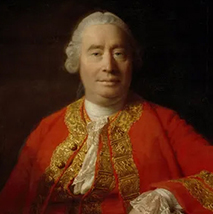
Humean thought _ Named after David Hume, 18th century Scottish
philosopher, historian, economist, & essayist.
His ideas represent a radical paradigm shift, often
referred to as 'Hume's wrecking ball.' |
Does a musical score on a bookshelf constitute music? |
|
|
In order to say that there is music, at least one observer is required listening to and/or imagining the musical sound. (Approach represented by J.B. Davies) |
Carl E. Seashore (1938) "Psychology of Music"
|
John B. Davies (1978) "The Psychology of Music"
|
|
|
|
Definitions / Criterial Attributes / Categorization
"To perceive is to categorize, to
conceptualize is to categorize, to learn is to form
categories, to make decisions is to categorize."
"The essence of creativity is figuring out how to use what
you already know in order to go beyond what you already
think."
Jerome Bruner, The Process of Education, 1960 (key figure in Constructivism, along with Montessori, Vygotsky,
Dewey, and Piaget)
|
|
|
Classic Rock |
|
|
|
|
Dominant 7th Chord |
Pentatonic Theme |
Sound / Noise / Music / Communication
|
|
|
|
|
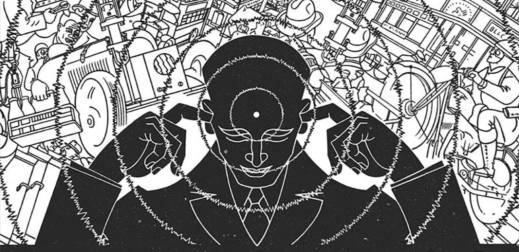
Noise as "Unwanted Sound" Noise Music |
|
|
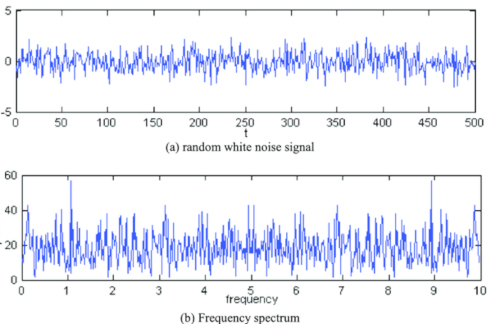
Noise is: (a) an auditory sensation arising in response to non-periodic sound waves/signals, with broad, flat, dense spectral distributions (vibrational/physical frame of reference--objectively measurable) |
Noise is: (b) an auditory sensation that is undesirable/unpleasant/unintended within a given context, interfering with auditory sensations that are desirable/pleasant/intended (i.e. sounds) within the same context (cognitive/semantic frame of reference--based on communication & subjectively measureable variables) |
|
|
|
In our course, we will be alternating between the two definitions, above, depending on ... context. |
|

 David Byrne (2012) (short video interviews) Book Review (The Guardian) AUDIO BOOK: Part 1 Part 2 |
 Jeff Tweedy (2020) (podcast hosted by Malcolm Gladwell) |
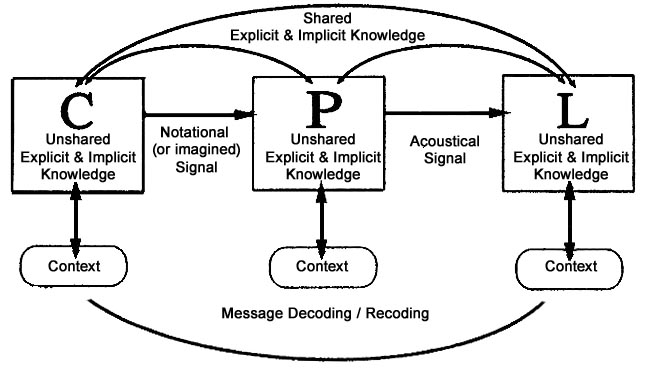
We adopt the following operational definition:
|
|
Model of musical communication - adapted from Kendall & Carterette,1990: 132. |
|
|
|
THE WORLD OF MUSIC |
||
|
Excerpt from 'Raga Hameer'. Traditional piece arranged
by Vilayat Khan. 'The Music of India and Pakistan' CD. The Rough
Guide. World Music Network © 1995. Titles from the film "Forbidden Planet" (1956). 'Electronic tonalities' by Luis and Bebe Baron. Music from the trailer for "Forbidden Planet". The unconventional music of the film has been replaced by a conventional, trendy (for its time) score, in the hopes of reaching a wider audience. The music is filled with referential aspects [musical passages that simply act as "pointers"] trading on the success of other contemporary films (e.g. Ben Hur) and on the popularity of widely accepted musical associations (e.g. lyrical strings and florid flute passages during the "woman in water" scene). Titles from the film "The Day The Earth Stood Still" (1951). First film score in stereo; first popular film using a Theremin; score by Bernard Hermann. First monolith scene from the film "2001: A Space Odyssey" (1968). 'Requiem' by G.Ligeti. Opening scene from the film "The Matrix" (1999). Full version; score by Don Davis. |
||
Loyola Marymount University - School of Film & Television